NAD+ IV Therapy: anti-aging & cellular rejuvenation
NAD+ IV Therapy Vancouver: Anti-Aging and Cellular Rejuvenation Benefits and Process
NAD+ IV therapy delivers nicotinamide adenine dinucleotide (NAD+) directly into the bloodstream to support cellular energy, DNA repair, and metabolic resilience—mechanisms linked to anti-aging and improved mental clarity. This guide explains how intravenous NAD+ reaches mitochondria, activates sirtuins, and supports PARP-mediated DNA repair, and it summarizes what patients in Vancouver should expect when pursuing medically supervised NAD+ infusion. Many people seek NAD+ for chronic fatigue, brain fog, or to complement broader longevity strategies; this article clarifies mechanisms, realistic benefits, safety considerations, and local access points. You will learn what NAD+ does at a molecular level, how IV delivery differs from oral supplements, the primary benefits for energy and cognition, and practical details about the treatment process. The sections below cover: a science-first definition and mechanism overview, a focused benefits breakdown with a concise EAV table, why Eterna Wellness in Fairview, Vancouver is a locally available option for supervised NAD+ IV therapy, and a stepwise walkthrough of treatment and safety considerations.
What Is NAD+ IV Therapy and How Does It Support Anti-Aging?
NAD+ IV therapy is an intravenous infusion of the coenzyme NAD+ that increases circulating levels to support mitochondrial ATP production, sirtuin activation, and PARP-dependent DNA repair. Delivering NAD+ intravenously bypasses gut absorption limits and can produce higher, steadier plasma concentrations than oral precursors, which is why IV delivery is used in clinical and medical-wellness settings. Increasing intracellular NAD+ is associated with enhanced metabolic resilience and cellular maintenance pathways that, in controlled studies, correspond with markers of improved cellular function and reduced oxidative stress. Below is a concise mapping of key molecules and their cellular functions to show how NAD+ relates to anti-aging mechanisms.
NAD IV Therapy: Cellular Energy, DNA Repair, and Anti-Aging
NAD+ (nicotinamide adenine dinucleotide) isn’t just another supplement or vitamin—it’s a coenzyme found in every cell of your body, and it’s absolutely fundamental to life itself. Think of NAD+ as the cellular equivalent of a rechargeable battery that powers countless biological processes.
Your body uses NAD+ for two critical functions. First, it helps convert the food you eat into the energy your cells need to function. This process, called cellular respiration, is how your body powers everything from heartbeats to thoughts. Second, NAD+ serves as a helper molecule for proteins called sirtuins, which regulate cellular health, DNA repair, and aging processes.
Here’s where things get interesting—and concerning. Your natural NAD+ levels decline significantly as you age. By the time you reach 50, you typically have about half the NAD+ you had in your 20s. This decline isn’t just a number on a lab test; it correlates with many hallmarks of aging:
This natural decline has led researchers and health practitioners to explore ways to boost NAD+ levels in the body, with NAD IV therapy emerging as one of the most direct approaches.
NAD IV Therapy: Benefits, Risks, and What to Expect from This Cellular Health Treatment
This mapping clarifies the molecular actions that lead into practical benefits discussed next: energy, cognition, and metabolic support.
| Molecule / Pathway | Primary Cellular Role | Resulting Benefit |
|---|---|---|
| NAD+ (coenzyme) | Electron carrier in redox reactions | Enhanced ATP production and metabolism |
| Sirtuins (SIRT1) | NAD+-dependent deacetylases | Improved cellular resilience and longevity signaling |
| PARP (DNA repair) | Uses NAD+ for poly-ADP ribosylation | Enhanced DNA repair and genomic maintenance |
What Is NAD+ and Why Is It Important for Cellular Health?
NAD+ (nicotinamide adenine dinucleotide) is a universal coenzyme required for redox reactions that drive ATP synthesis in mitochondria, making it essential for cellular energy production. It also serves as a substrate for enzymes that regulate DNA repair (PARP) and longevity pathways (sirtuins), so lower NAD+ correlates with reduced repair capacity and metabolic slowdown as people age. Current research through 2025 indicates systemic NAD+ levels decline with age, and restoring NAD+ can re-engage these maintenance pathways in cells under specific clinical protocols. Understanding NAD+’s central biochemical roles frames the rationale for intravenous supplementation as a targeted intervention to support cellular health.
NAD+ Metabolism: Mechanisms, Aging, and Therapeutic Potential
Nicotinamide adenine dinucleotide (NAD+) and its metabolites function as critical regulators to maintain physiologic processes, enabling the plastic cells to adapt to environmental changes including nutrient perturbation, genotoxic factors, circadian disorder, infection, inflammation and xenobiotics. These effects are mainly achieved by the driving effect of NAD+on metabolic pathways as enzyme cofactors transferring hydrogen in oxidation-reduction reactions. Besides, multiple NAD+-dependent enzymes are involved in physiology either by post-synthesis chemical modification of DNA, RNA and proteins, or releasing second messenger cyclic ADP-ribose (cADPR) and NAADP+. Prolonged disequilibrium of NAD+metabolism disturbs the physiological functions, resulting in diseases including metabolic diseases, cancer, aging and neurodegeneration disorder. In this review, we summarize recent advances in our understanding of the molecular mechanisms of NAD+-regulated physiological responses to stresses, the contribution of NAD+deficiency to various diseases via manipulating cellular communication networks and the potential new avenues for therapeutic intervention.
NAD+was first described in 1906 as a component that could increase the fermentation rate in yeast.1Years later, NAD+was determined to play a vital role for hydrogen transfer in redox reaction.2As an essential redox carrier, NAD+receives hydride from metabolic processes including glycolysis, the TCA cycle, and fatty acid oxidation (FAO) to form NADH. NADH, therefore, serves as a central hydride donor to ATP synthesis through mitochondrial OXPHOS, along with the generation of ROS. Beyond its vital role as a coenzyme in energy metabolism, the important role of NAD+has expanded to be a co-substrate for various enzymes including sirtuins, PARPs, CD157, CD73, CD38 and SARM1.3,4,5,6Recently, it has been found that NAD+serves as a nucleotide analog in DNA ligation and RNA capping.7,8Therefore, the dynamic NAD+and its metaboli
NAD+ metabolism: pathophysiologic mechanisms and therapeutic potential, N Xie, 2020
This role overview leads naturally to how IV-delivered NAD+ may translate into measurable benefits for energy and cognition.
How Does NAD+ IV Therapy Promote Cellular Rejuvenation and Longevity?
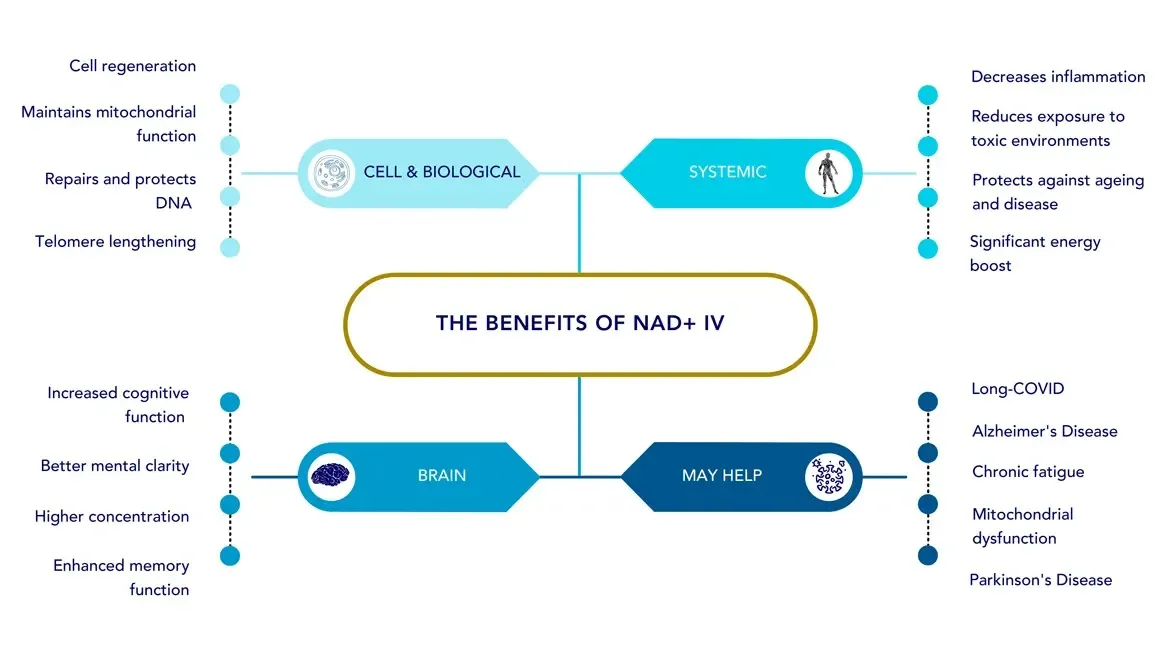
By elevating extracellular and subsequently intracellular NAD+ pools, IV infusions facilitate sirtuin activation, which modulates gene expression related to mitochondrial biogenesis and stress resistance. Enhanced PARP activity supports ongoing DNA repair processes, reducing accumulation of molecular damage that contributes to cellular aging. Together, these mechanisms reduce oxidative stress and improve mitochondrial efficiency, which can manifest as increased cellular energy, clearer cognition, and improved tissue maintenance over time. While clinical outcomes vary by individual and protocol, these pathways explain why NAD+ is considered a mechanistic target for cellular rejuvenation strategies.
NAD+ Metabolism: Mitochondria, Aging, and Therapeutic Applications
Nicotinamide adenine dinucleotide (NAD+) is a central metabolic cofactor in eukaryotic cells that plays a critical role in regulating cellular metabolism and energy homeostasis. NAD+in its reduced form (i.e. NADH) serves as the primary electron donor in mitochondrial respiratory chain, which involves adenosine triphosphate production by oxidative phosphorylation. The NAD+/NADH ratio also regulates the activity of various metabolic pathway enzymes such as those involved in glycolysis, Kreb’s cycle, and fatty acid oxidation. Intracellular NAD+is synthesized de novo froml-tryptophan, although its main source of synthesis is through salvage pathways from dietary niacin as precursors. NAD+is utilized by various proteins including sirtuins, poly ADP-ribose polymerases (PARPs) and cyclic ADP-ribose synthases. The NAD+pool is thus set by a critical balance between NAD+biosynthetic and NAD+consuming pathways. Raising cellular NAD+content by inducing its biosynthesis or inhibiting the activity of PARP and cADP-ribose synthases via genetic or pharmacological means lead to sirtuins activation. Sirtuins modulate distinct metabolic, energetic and stress response pathways, and through their activation, NAD+directly links the cellular redox state with signaling and transcriptional events. NAD+levels decline with mitochondrial dysfunction and reduced NAD+/NADH ratio is implicated in mitochondrial disorders, various age-related pathologies as well as during aging. Here, I will provide an overview of the current knowledge on NAD+metabolism including its biosynthesis, utilization, compartmentalization and role in the regulation of metabolic homoeostasis. I will further discuss how augmenting intracellular NAD+content increases oxidative metabolism to prevent bioenergetic and functional decline in multiple models of mitochondrial diseases and age-related disorders, and how this knowledge could be translated to the clinic for human relevance.
Emerging therapeutic roles for NAD+ metabolism in mitochondrial and age-related disorders, 2016
These mechanistic insights set the stage for a practical look at benefits for energy and mental clarity in the next section.
What Are the Key Benefits of NAD+ IV Therapy for Energy and Mental Clarity?
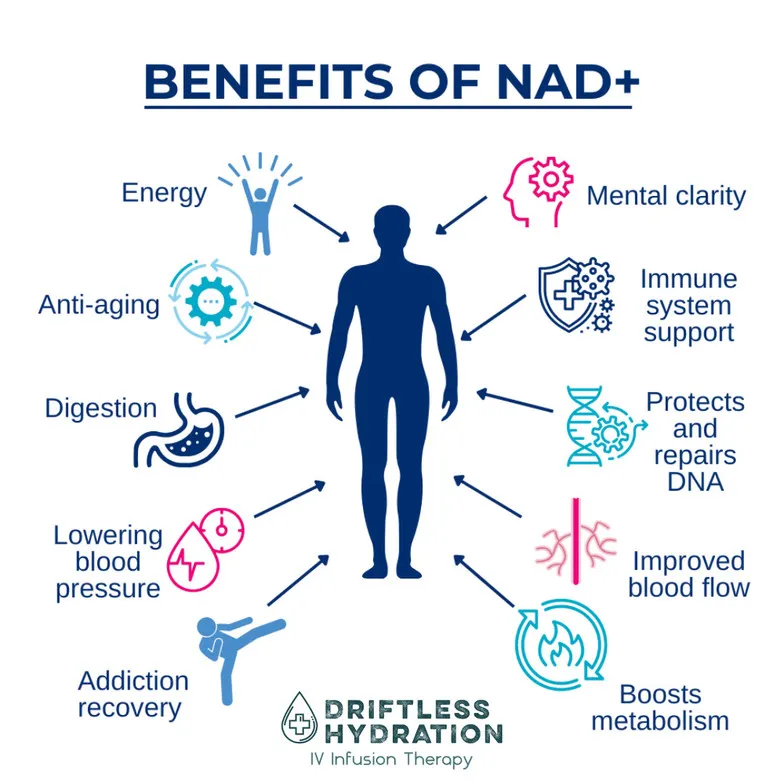
NAD+ IV therapy primarily supports cellular energy production and neuronal metabolism, which can reduce fatigue and improve focus for some patients. By enhancing mitochondrial ATP synthesis and supporting metabolic enzyme function, NAD+ infusions may improve physical stamina and recovery in clinical contexts where cellular energy is compromised. For cognition, increased NAD+ availability helps neuronal cells meet energy demands, supports neurotransmitter balance, and may improve subjective brain fog and concentration in some individuals. Below is a compact summary table linking NAD+ actions to common benefits to clarify expected outcomes.
The table below synthesizes mechanism-to-benefit links and prepares the reader for specific practical examples of energy and cognition effects.
| Entity | Mechanism | Benefit |
|---|---|---|
| NAD+ | Supports mitochondrial ATP production | Increased energy and reduced fatigue |
| Sirtuins | Promotes mitochondrial biogenesis | Better metabolic adaptability |
| Neuronal NAD+ | Enhances cellular metabolism in neurons | Improved focus and reduced brain fog |
How Does NAD+ IV Therapy Help Reduce Fatigue and Boost Metabolism?
NAD+ supports enzymes in oxidative phosphorylation, increasing ATP availability, which can alleviate cellular energy deficits that present as fatigue. For people with metabolic slowdowns or post-illness exhaustion, IV NAD+ can be part of a medically supervised plan to restore energy balance and support recovery of normal activity levels. Recent clinical observations emphasize measured, monitored administration rather than open-ended use, because responses vary and multidisciplinary care often yields the best results. Exploring NAD+ for metabolic support should be done alongside assessment of nutrition, sleep, and concurrent therapies to optimize outcomes.
This metabolic perspective naturally leads to how neuronal metabolism links to cognitive function, discussed next.
Can NAD+ IV Therapy Improve Brain Fog and Cognitive Function?
Neurons depend on steady ATP and NAD+-driven metabolic pathways; restoring NAD+ can therefore improve neuronal resilience, synaptic activity, and neurotransmitter support that underlie attention and clarity. Small clinical series and growing 2025 literature indicate some patients report clearer thinking and faster mental processing after supervised NAD+ protocols, though randomized data remain limited and responses are individualized. Framing expectations is important: some people experience subjective improvements quickly, while others show gradual change as downstream repair and mitochondrial improvements accrue. Patients should consider NAD+ as one part of a broader cognitive health plan including sleep, exercise, and targeted therapies.
These realistic expectations segue to local options for medically supervised access in Vancouver.
Why Choose Eterna Wellness for NAD+ IV Therapy in Vancouver?
Eterna Wellness is a medical aesthetics and longevity clinic in Fairview, Vancouver, BC offering nurse-led, medically supervised IV therapy including NAD+ infusions within a broader suite of wellness and anti-aging services. The clinic emphasizes personalized treatment plans, evidence-based protocols, and medical-grade technology to integrate NAD+ therapy with other modalities such as injectables, laser therapies, and hormone support where clinically appropriate. Eterna’s presence in Fairview and its aggregate review profile contribute local credibility for patients seeking supervised NAD+ treatment in Vancouver.
Beyond NAD+ IV therapy, Eterna Wellness offers a range of aesthetic and anti-aging treatments. For those interested in enhancing facial aesthetics and reducing signs of aging, various injectables are available, tailored to individual needs and desired outcomes.
The clinic also integrates advanced technology for skin rejuvenation and other cosmetic concerns. Patients can explore different laser therapies designed to improve skin texture, reduce pigmentation, and address specific dermatological conditions as part of a comprehensive wellness plan.
Below are succinct reasons patients choose a medically supervised clinic for NAD+ infusions.
- Personalized assessments ensure dosing and monitoring are tailored to individual health status.
- Nurse-led administration provides medical oversight during infusion and immediate post-treatment observation.
- Integration with other wellness services supports a holistic longevity approach.
These features explain why local, nurse-led clinics are preferred for procedures that require screening and monitoring, which we detail next.
What Makes Eterna Wellness’s NAD+ IV Therapy Personalized and Safe?
Eterna Wellness uses medical screening and individualized treatment planning to determine whether NAD+ IV therapy is appropriate, factoring in medical history, current medications, and wellness goals. Nurse-led administration under medical oversight ensures IV insertion, infusion rate, and patient monitoring follow safety-focused protocols while tailoring dosing to tolerance and objectives. Follow-up and coordination with other clinic services allow adjustments over a treatment course, emphasizing evidence-based practice and a safety-first approach rather than one-size-fits-all regimens.
This safety-first description leads into patient feedback and review signals that prospective patients commonly consult.
What Do Patients Say About Their NAD+ IV Therapy Experience at Eterna Wellness?
Public review aggregates note strong local satisfaction with Eterna Wellness’s medical-wellness offerings, reflecting patient confidence in the clinic’s nurse-led, evidence-informed approach to IV therapy and longevity services. The clinic’s listed aggregate rating indicates many patients report positive experiences around staff professionalism and care coordination, though individual outcomes vary by health context and protocol. Prospective patients are encouraged to review published testimonials and clinic review profiles to set balanced expectations and prepare questions for their initial consultation.
This local trust context transitions into the stepwise treatment process and what patients should expect during a visit.
How Does the NAD+ IV Therapy Process Work and What Should Patients Expect?
NAD+ IV therapy follows a stepwise clinical process: medical consultation and screening, IV insertion and infusion with monitoring, and brief recovery with aftercare guidance. The consultation assesses medical history, goals, and contraindications; the infusion phase administers NAD+ at a monitored rate; recovery includes observation for immediate side effects and post-infusion hydration or rest recommendations. Below is a concise EAV-style table that summarizes common process elements, durations, and purposes to clarify patient expectations.
This process overview ensures patients understand timing and preparation needs before scheduling a supervised session.
| Phase | Typical Duration | Purpose |
|---|---|---|
| Consultation & Screening | 15–30 minutes | Assess suitability, review medications and goals |
| Infusion | 30–60 minutes (varies) | Deliver NAD+ with monitored rate and vital checks |
| Recovery & Aftercare | 10–30 minutes | Observe for reactions, provide hydration and guidance |
What Happens During a NAD+ IV Therapy Consultation and Treatment Session?
During consultation, clinicians review medical history, current medications, and specific goals to determine candidacy and appropriate dosing strategy; this risk assessment helps identify contraindications and informs monitoring needs. The treatment session begins with IV catheter insertion, establishing a controlled infusion rate, and continuous observation for tolerance and immediate reactions. Typical session duration commonly falls between 30 and 60 minutes depending on protocol and patient response, with staff available to adjust infusion parameters as needed. Patients are advised to hydrate, avoid heavy meals immediately before treatment if instructed, and arrange light activity for the remainder of the day.
This procedural clarity prepares the reader for safety considerations that follow next.
Are There Any Side Effects or Safety Considerations with NAD+ IV Therapy?
Yes, while many patients tolerate NAD+ infusions well, mild side effects such as nausea, flushing, headache, or lightheadedness can occur and are typically transient under supervised care. Safety measures include pre-treatment screening for contraindications, nurse-led monitoring during infusion, and post-infusion observation to manage any adverse reactions promptly. Patients with certain medical conditions or on specific medications may be advised against NAD+ infusion or require specialist clearance, which is why medically supervised assessment is essential. Eterna Wellness and similar clinics use these screening and monitoring practices to prioritize safety and individualized dosing.
This safety checklist reinforces why supervised, clinic-based administration is recommended for NAD+ IV therapy.
- Common mild side effects: nausea, flushing, dizziness.
- Screening steps: medical history review, medication check, symptom discussion.
- When to seek help: persistent severe symptoms, new rash, or breathing difficulty.
These checklist items close the article by emphasizing safety and the role of medical supervision in NAD+ IV therapy.
Frequently Asked Questions
1. How often should I undergo NAD+ IV therapy for optimal results?
The frequency of NAD+ IV therapy can vary based on individual health goals and conditions. Many practitioners recommend an initial series of treatments, often spaced a week apart, to build up NAD+ levels effectively. After the initial phase, maintenance sessions may be scheduled monthly or quarterly, depending on personal health objectives and response to therapy. It’s essential to consult with a healthcare provider to tailor a plan that aligns with your specific needs and lifestyle.
4. Can NAD+ IV therapy help with specific health conditions?
NAD+ IV therapy has shown promise in supporting various health conditions, particularly those related to energy metabolism, cognitive function, and recovery from chronic fatigue. Patients with conditions such as fibromyalgia, chronic fatigue syndrome, or those recovering from illness may experience benefits from NAD+ therapy. However, results can vary, and it is essential to approach treatment as part of a comprehensive health plan tailored to individual needs and conditions.
5. How long does it take to see results from NAD+ IV therapy?
The timeline for experiencing results from NAD+ IV therapy can differ among individuals. Some patients report feeling increased energy and mental clarity shortly after their first session, while others may notice gradual improvements over several treatments. Factors such as individual metabolism, health status, and the specific goals of therapy can influence the response time. It’s important to maintain realistic expectations and discuss any concerns with your healthcare provider throughout the treatment process.